I listen first
Your first consultation takes up to 90 minutes. I go through your health history, what you have tried, and everything you currently take, including medicines, supplements and any TCM herbs.
Herbs chosen for you, not for your symptom alone. As a medical herbalist, I take time to understand your health, your medication and your daily life, then suggest herbs to support you, with safety first.
Herbal medicine, or phytotherapy, is the use of plants and plant extracts to support health. People in Singapore and around the world have used herbs for generations, in food, teas and traditional remedies.
A medical herbalist brings that knowledge together with modern research. The aim is not to hand you a generic remedy for a symptom, but to choose herbs that suit your body, your health history and any medication you take.
The World Health Organization recognises that traditional medicine is used in countries all over the world, and in 2025 it adopted a global strategy for 2025 to 2034 aimed at making it safer and better supported by evidence. In Australia, the Naturopaths & Herbalists Association of Australia (NHAA), which John belongs to, began in 1920 as an association for herbalists.
Herbal medicine is one part of naturopathic care, alongside food and lifestyle. You can read about naturopathy in Singapore for the bigger picture.
Your first consultation takes up to 90 minutes. I go through your health history, what you have tried, and everything you currently take, including medicines, supplements and any TCM herbs.
I select herbs traditionally used to support what you are experiencing. Herb and medicine interactions are part of my training, so I check each herb against your medication, your health and your circumstances before suggesting anything.
At your first consultation I build your personalised naturopathic wellness plan and prescription with you. At follow-up consultations we check in on how you are going and adjust your herbs and plan together.
Herbs and supplements are priced separately from the consultation. You can collect them from the practice, or I can arrange delivery.
Herbs are natural, but natural does not always mean safe for everyone. I take safety seriously, and I am honest about what is known and what is not.
If you are using any herb or supplement and feel unwell, stop it and speak to your doctor.
The Health Sciences Authority (HSA) has repeatedly warned about products sold as “herbal” or “natural” that were found to contain hidden prescription medicines, such as steroids. Harm from these products can build up quietly. HSA suggests being careful when you see:
HSA advises buying from pharmacies and established retailers, and checking with your doctor or pharmacist if you are unsure. Read its guidance on traditional herbal remedies and on supposedly herbal or natural products. If you are already taking a product and feel unwell, stop it and see your doctor.
Many people take supplements without being sure what is in them. I read supplement labels closely: the active ingredients, the form and amount of each, the added ingredients, and how they may interact with your medication.
If you are already taking supplements, bring the bottles to your consultation and we will go through them with you. You are also welcome to ask me about any product you are thinking of buying.
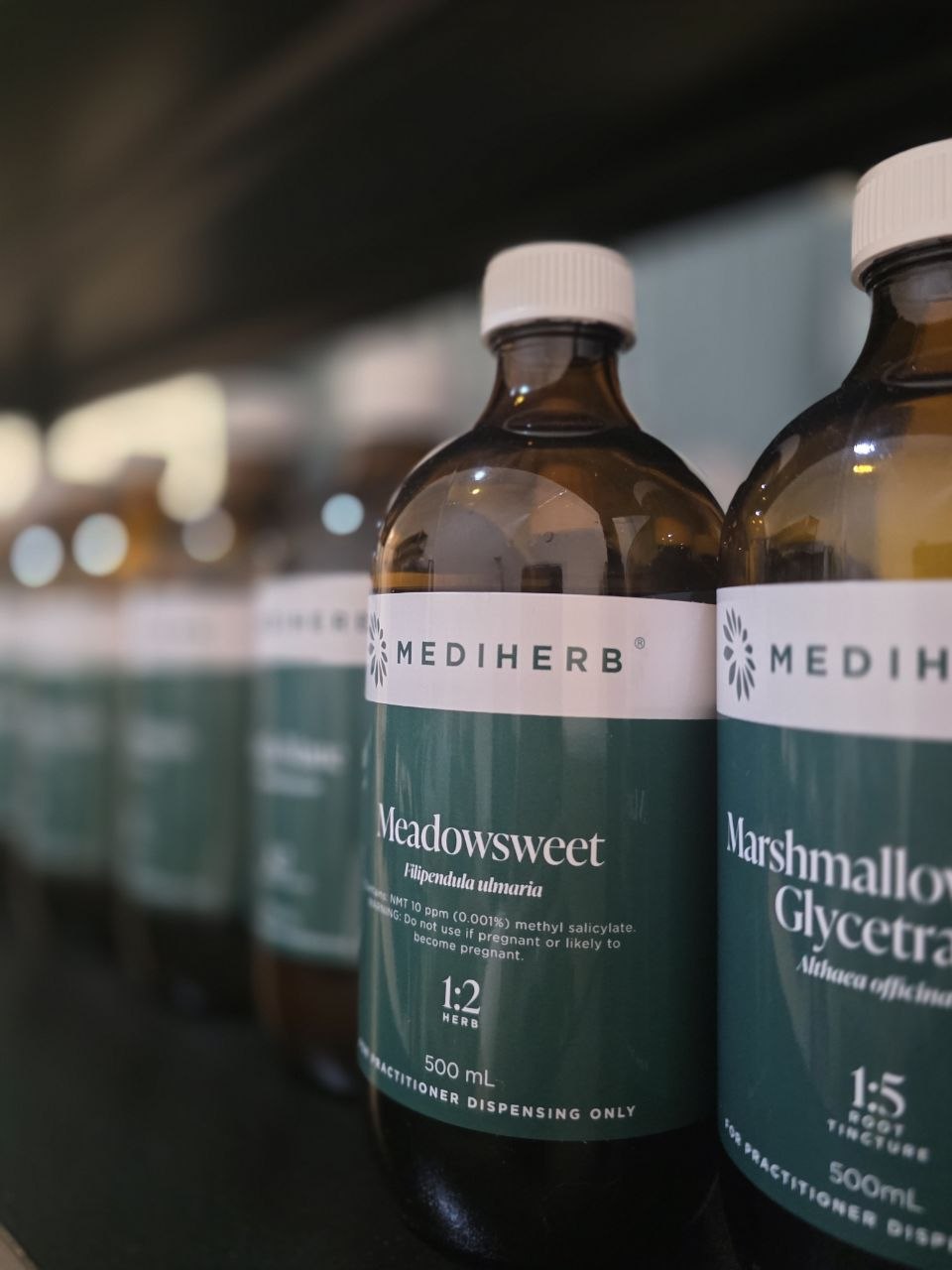
When I dispense supplements myself, I mainly choose practitioner-only products, because I find their quality and dosing more dependable.
I grow local herbs for use in my practice and teach everyday Singaporeans how to grow and use their own herbs at home. Explore the directory of local herbs, with traditional use, current research and safety notes for each.
The shop carries a range of spices, spelt foods and creams inspired by the writings of St Hildegard of Bingen, for everyday use at home.
John Tang is a naturopath and medical herbalist (Bachelor of Naturopathy and Herbal Medicine, New Zealand) and a member of the Naturopaths & Herbalists Association of Australia. He uses herbs himself, and he understands what it is like to live with a long-standing health concern.
Herbal medicine, also called phytotherapy, uses plants and plant extracts to support the body. Many herbs have a long history of traditional use, and some have also been studied in modern research. A medical herbalist chooses herbs to suit the person, not just the symptom.
Sometimes, but not always. Some herbs can interact with prescription medicines. Herb and medicine interactions are part of my training, and I ask about everything you take and check it before suggesting anything. Please never stop or change your medication without speaking to your doctor.
No. They are separate systems. My training is mainly in Western herbal medicine (Bachelor of Naturopathy and Herbal Medicine, New Zealand), and I am slowly learning and researching more about local herbs. If you also see a TCM physician or take TCM herbs, please tell us so I can keep your care safe.
Some herbs are not suitable during pregnancy or breastfeeding, and some are not suitable for young children. Please tell us if you are pregnant, breastfeeding or planning a pregnancy, and I will take that into account.
Everyone is different, and I do not promise results. At follow-up consultations we check in on how you are going and adjust your plan together.
No. Herbs and supplements are priced separately from the consultation. You can see the consultation fees on the booking page.
More questions? See the Q&A, read what clients say, or get in touch. Before your first visit, I ask you to complete the pre-consultation questionnaire.
Thera Sanctum’s care complements, and does not replace, the care of your doctor. Naturopaths do not diagnose or treat medical conditions.
I believe you should be able to check what I tell you. These are the organisations and documents behind this page.
Book a consultation, or ask your questions first on a free 15-minute discovery call.