
Black Face General
Strobilanthes crispa · Pecah Beling · 黑面将军 (Hēi miàn jiāngjūn)
Strobilanthes crispa (Blume)
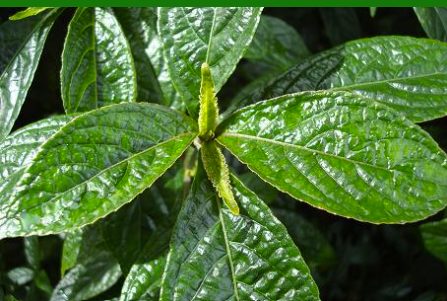
Overview
A bitter, cooling shrub native to Malaysia and Indonesia, long grown in home gardens across Southeast Asia. Known in Malay as Pecah Beling or Keji Beling, and in Mandarin as 黑面将军 (Black Face General). Note: some pharmacological literature also lists this plant as Sericocalyx crispus — Kew's Plants of the World Online confirms Strobilanthes crispa is the currently accepted botanical name, with Sericocalyx crispus as a synonym.
Traditional Use
Widely used in Malay and Indonesian traditional medicine as a diuretic and "detoxifying" herb — traditionally taken to support urinary flow, liver function, and general internal cleansing, often prepared with green apple or luohan fruit to soften its intense bitterness.
What the Research Shows
Note: Tier 1–4 evidence — mostly laboratory and animal studies; no large human clinical trials yet published.
- Strong in-vitro evidence for anti-inflammatory and antioxidant activity, with active compounds (luteolin, quercetin) shown to inhibit inflammatory pathways.
- Animal studies support a genuine diuretic effect and a role in dissolving urinary "gravel" — consistent with its long traditional use for urinary comfort.
- Animal studies also show liver-protective, blood-glucose-lowering, and cholesterol-lowering effects; human confirmation is still pending.
- Laboratory studies show cytotoxic activity against several cancer cell lines — early-stage research only, not evidence of a treatment effect in people.
How It's Traditionally Prepared
Commonly simmered as a leaf decoction, often paired with green apple (60–100 g fresh leaves + 3 apples, simmered ~90 min) or luohan fruit for sore throat and cough. Stronger whole-plant concentrates are used traditionally for urinary gravel, under guidance.
Safety & Who Should Be Cautious
Traditionally avoided by people with cold, deficient constitutions (may worsen fatigue or loose stools) and in pregnancy. Because of its diuretic action, may interact with diuretic, blood pressure, or blood-sugar medication — worth flagging to your prescriber. Not recommended for prolonged use without monitoring, particularly for anyone with existing kidney concerns.
This page is educational and reflects traditional use and preliminary research. It is not medical advice and this herb is not a registered medicine. Speak with a qualified healthcare provider before using any herb alongside existing medication or a diagnosed condition.
← Back to Local Herb Directory