
Hong Tian Wu
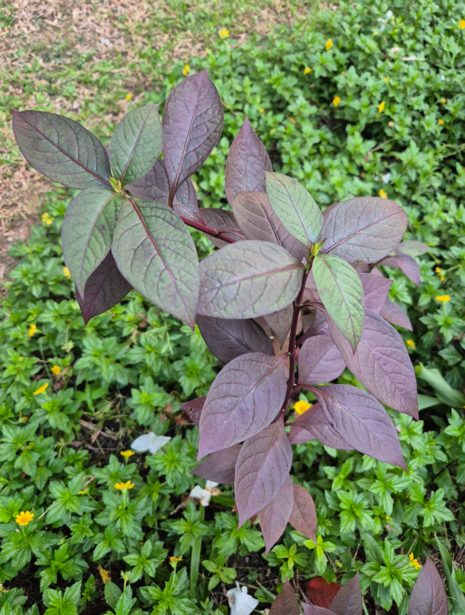
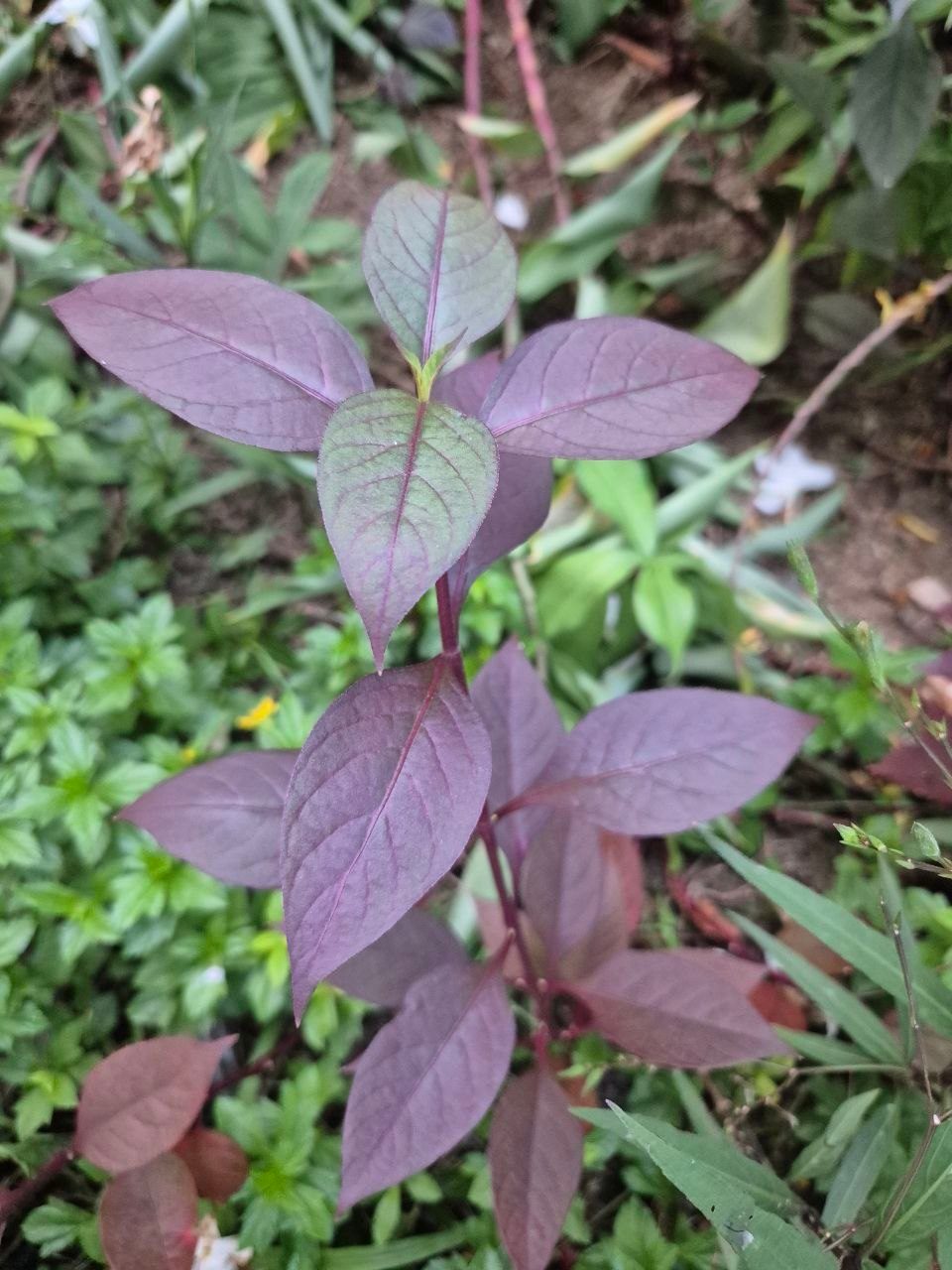
Alternanthera sessilis 'Red' · Red Carpet Weed · 红田乌 (Hóng tián wū)
Alternanthera sessilis (L.) R.Br. ex DC. cv. 'Red'
Overview
A low-growing, reddish-stemmed perennial herb common in Singapore and Malaysian gardens, known as Hong Tian Wu (红田乌) in Mandarin and Ponnanganni in Tamil/Ayurvedic tradition. Widely eaten as a leafy vegetable as well as used medicinally.
Traditional Use
Valued in Traditional Chinese Medicine as a blood-nourishing, heat-clearing herb supporting healthy circulation, and in Ayurveda/Siddha tradition (as Ponnanganni) specifically for eye health and vision support (a chakshushya herb). Also used traditionally for postpartum recovery and general convalescence.
What the Research Shows
Note: Tier 4–5 evidence — laboratory studies and long-standing traditional/culinary use; this is the least clinically studied of the four local herbs.
- Laboratory studies confirm strong antioxidant activity, driven by betacyanins (the pigment responsible for its red colour) and flavonoids like rutin and quercetin.
- Rutin and quercetin are well-documented in the wider scientific literature for supporting capillary and vascular wall integrity, consistent with this herb's traditional "vascular tonic" reputation.
- Animal studies suggest a cholesterol-lowering effect.
- Eye-health use is traditional/classical (Ayurveda, Siddha) rather than clinically tested — carotenoid and vitamin A content are consistent with, but don't directly prove, this traditional claim.
- Long, safe history of culinary use across South and Southeast Asia supports a good general safety profile as a food-herb.
How It's Traditionally Prepared
Traditionally simmered with red dates and Dang Shen (Codonopsis) as a twice-weekly tonic, or eaten as a stir-fried vegetable. A light infusion (fresh leaves steeped 5–8 minutes) is used as a gentle daily cooling drink.
Safety & Who Should Be Cautious
Generally well tolerated given its long culinary history. Traditionally avoided in cold-deficient constitutions (cold extremities, fatigue without heat signs). Contains quercetin/rutin, which theoretically has an additive effect with blood-thinning medication — worth a mention to your doctor if you're on anticoagulants. Avoid if allergic to the Amaranthaceae family (spinach, beetroot).
This page is educational and reflects traditional use and preliminary research. It is not medical advice and this herb is not a registered medicine. Speak with a qualified healthcare provider before using any herb alongside existing medication or a diagnosed condition.
← Back to Local Herb Directory